7 Tips to Optimize Material Flow in a Multilevel Warehouse
7 Tips to Optimize Material Flow in a Multilevel Warehouse Vertical reciprocating conveyors (VRCs) provide a right-sized, tailored lifting solution
A LEVEL CARRIAGE REGARDLESS OF LOAD PLACEMENT
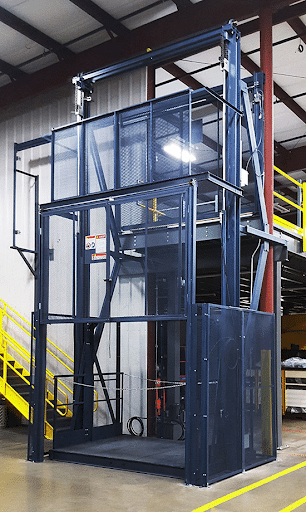
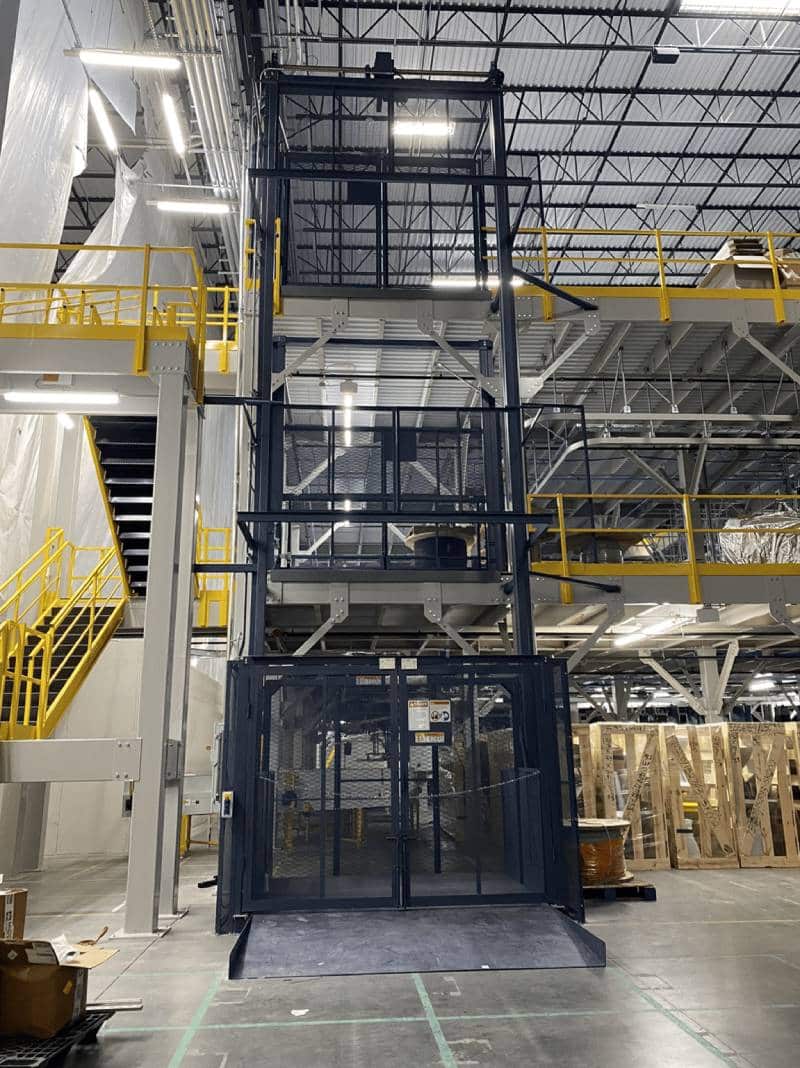
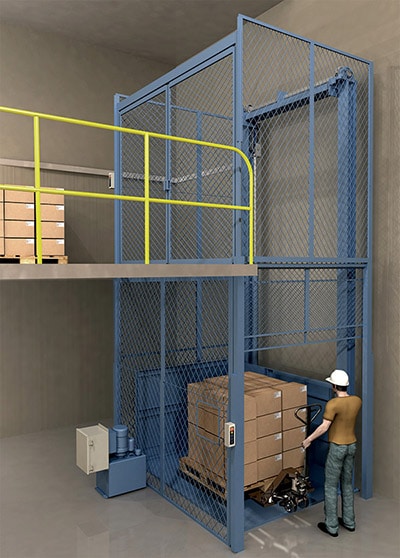
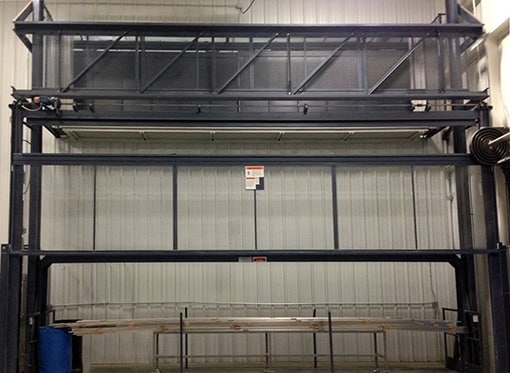
The 21 Series vertical reciprocating conveyor (VRC) from PFlow Industries is a 2-post hydraulic lift that can handle loads of up to 6,000 pounds. The overall lifting capacity is determined by the carriage size and added options that increase its overall weight.
With a maximum carriage size of up to 12’ wide by 10’ long, the 21 Series VRC easily conveys a wide variety of materials, including materials on pallets. Available in cantilever or straddle configurations, the 21 Series VRC is lifted and lowered by chain over sprocket actuated by guide column-mounted hydraulic cylinders. A torsion bar links the two hydraulic cylinders to ensure both move at the same speed to equalize the load and ensure the carriage remains level at all times, regardless of load placement.
The 21 Series VRC has a vertical rise of 22’ and can be used indoors or outdoors to move materials up to two levels.
Each 21 Series unit is customized to fit your space and vertical lift application needs.
21 Series Hydraulic Lift Overview
Advanced safety features built into each 21 Series VRC
Lifting and lowering bulky loads of varying sizes, shapes, and weight. Ideal for use in both indoor and outdoor environments.
Lift loads of up to 6,000 lbs
Maximum carriage size of 12’ x 10’ is perfect for moving pallet loads
The standard travel speed is 24 FPM, with speeds up to 30 FPM available
10 cycles per hour, 100 cycles per day
Safety codes (ASME B20.1) require interlocked gates with enclosures on all sides of the lift. Enclosures must be a minimum of 8’ high and reject a ball 2” in diameter.
Standard power requirements are 208/230/460VAC, 3-phase (single-phase available). Control voltage is 24VAC. Push button stations and pump mounted pre-wired control panel are NEMA 12 rated. Push button stations provided at each level and include call/send operators and mushroom head emergency stop. Quick connect pre-wiring is optional.
“We are very familiar with the PFlow product line, so we took the project lead on the local level. We worked with PFlow to get the specs just right, expedite the process, and integrate several custom features that were requested.”
– Marco Dávila, Mexico Sales Manager, Johnson Equipment
A vertical reciprocating conveyor (VRC) is a much safer option than moving boxes, objects, and pallets by hand or forklift. VRCs come with a wide range of standard and optional features to ensure the safety of both workers and cargo.
Generally speaking, the 21 Series requires minimal maintenance to keep it in good operating condition. Regular visual inspections, the addition of axle grease, and replacing the hydraulic oil and oil filter every 12 months are common maintenance tasks. Click here to view the 21 Series Preventative Maintenance and Schedule Checklist.

7 Tips to Optimize Material Flow in a Multilevel Warehouse Vertical reciprocating conveyors (VRCs) provide a right-sized, tailored lifting solution

Accidents or near misses? Materials piling up at a pinch point or getting damaged during transfer? Mounting maintenance or repair
When it comes to moving material loads between floor levels, not all solutions are created equal. While forklifts, inclined conveyors,